
Curious about keeping bees, or wondering what it’s like to open a hive and see how they live? Whether you’re exploring a new hobby or looking for a unique way to spend a Saturday, this relaxed, hands-on experience is designed with beginners in mind. No experience needed, just curiosity.
After a short introduction, you’ll put on protective gear and head into the apiary. With guidance from our beekeeper, you’ll open a hive, handle frames, and observe the colony up close. There’s no pressure to get everything right, just a chance to learn, take it in, and build confidence at your own pace.
By the end of the our half-day beekeeping session, you’ll have a clear understanding of the beekeeper’s role through the seasons and what’s involved in managing a healthy colony, including how to:
We are a non-profit and income from these sessions supports our nature-based programmes for refugees and asylum seekers.
Spaces are limited and early booking is recommended.
Times: Saturdays, 10:00 – 15:00 (5 hrs, including lunch break)
Location: Meadow Orchard Project Apiary, 151 Park Rd, London N8 8JD
Group size: 6 participants
Age requirement: 12+
Price: £90 (concession tickets available)
Please bring:
Provided:
We keep group sizes to six people at a time, to ensure close guidance throughout. The session is paced around the bees, with a focus on calm handling, observation, and practical decision-making. Here’s how we will structure the day:
Morning (approx. 2 hours)
Lunch break
Afternoon (approx. 2 hours)
Our work is led by experienced beekeepers who combine technical knowledge with a thoughtful, people-centred approach.
Dan is an experienced Swedish beekeeper, permaculture practitioner, and pollinator garden and apiary designer. His calm, considered approach helps people feel at ease around bees, and his beekeeping philosophy is based in organic and natural beekeeping, while building a clear understanding of the responsibilities involved and supporting the wider pollinator landscape.
Katie leads much of Bee Connection’s ecological and community work, particularly with schools and families. She helps children develop curiosity, confidence, and care for the natural world through close observation and practical engagement.
Together, we create welcoming learning environments where people can connect with bees through hands-on experience, observation, and shared curiosity.
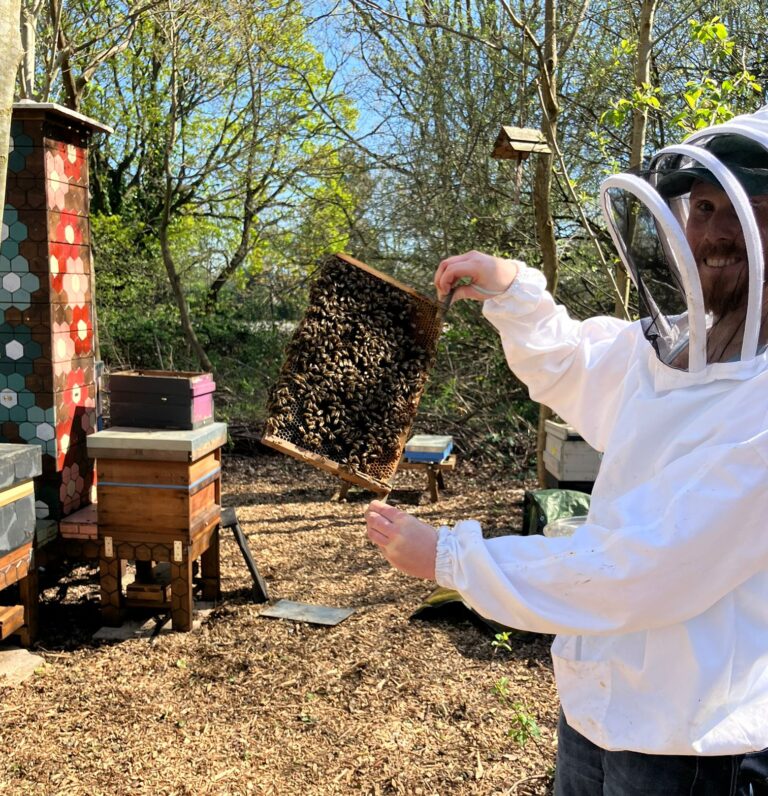
We teach beekeeping as part of a wider ecological responsibility, one that includes wild pollinators, plants, soil, and the people who share the landscape.
Keeping bees brings obligations beyond the hive. If we increase honeybee numbers, we must also support forage and habitat for all pollinators. We do this by planting a diverse range of trees and plants that flower across seasons, providing continuous food for wild bees, hoverflies, moths, and other invertebrates.
We also support conservation of the native British black bee (Apis mellifera mellifera), which has declined due to imported strains and habitat loss.
Our approach draws on organic and natural beekeeping principles. We prioritise careful observation, working with the bees rather than against them, while taking responsibility for disease management, swarming, and our impact on the surrounding environment.
Honey is a by-product of this work, not its purpose. Colony health and ecological balance come first.
We are a social enterprise. Income from our courses helps fund therapeutic beekeeping and nature-based programmes for refugees, asylum seekers, and survivors of torture.
These sessions offer calm, structured outdoor spaces where participants can engage with bees and the natural world at their own pace. The steady rhythms of beekeeping and simple, practical tasks help create a sense of focus and ease.
The same principles guide all our work: steadiness, clarity, and respect for both people and the living systems we work with.
We offer bespoke beekeeping sessions for teams looking for more grounded alternative activities to off-site days. Working with bees naturally encourages people to slow down, observe carefully, and respond to complexity without rushing.
Team sessions are led by our beekeeper Dan, who has a master’s degree in organisational behaviour. He shapes sessions around each group, with practical hive work, observation, and guided reflection. All sessions take place outdoors and can be adapted in size, format, and focus.
If you’re interested in a session for your team, get in touch to explore what might work best.